Showing posts with label Brainpower. Show all posts

Tuesday, July 19, 2016

Cinnamon may help us learn new information quicker


Scientists claim cinnamon could actually make us smarter by improving our understanding. A study has found slow learners who consumed the household spice could process new information quicker by affecting proteins in the brain.

Little is known about why some people don't understand concepts as quick as other people, or how the brain's ability can be improved. But experts believe understanding lies in the hippocampus - a small part of the brain which generates, organizes and stores memory.

Slow learners tend to have less CREB - a protein involved in memory and learning - in their hippocampus than good learners. They also have more GABRA5 - a protein which prevents new information from going into the brain. 

But a new study by the Rush University Medical Center, Chicago, conducted on mice, found cinnamon balanced out the protein levels to those found in good learners.

Mice in the study were fed ground cinnamon, which their bodies converted into sodium benzoate - a chemical used in drugs to treat brain damage. When the sodium benzoate entered their brans, it increased the amount of CREB and decreased GABRA5. These changes in turn led to improved memory and learning among the mice.

Professor Kalipada Pahan, lead researcher of the study, said: 'This would be one of the safest and the easiest approaches to convert poor learners to good learners.

'Understanding brain mechanisms that lead to poor learning is important to developing effective strategies to improve memory and learning ability.' 

Researchers used a Barnes maze - a standard elevated circular maze consisting of 20 holes - to identify mice with good and bad learning abilities. 

After two days of training, the mice were examined for their ability to find the target hole. They were then tested after one month of eating cinnamon.

The researchers found after consuming the spice, the mice deemed as poor learners had improved their memory and learning to a level found similar to those with good learning abilities.

However, they did not find any significant improvement among good learners. 

Professor Pahan added: 'We have successfully used cinnamon to reverse biochemical, cellular and anatomical changes that occur in the brains of mice with poor learning.

'Individual difference in learning and educational performance is a global issue.

'We need to further test this approach in poor learners. If these results are replicated in poor learning students, it would be a remarkable advance.'  


Also read:

Friday, July 8, 2016

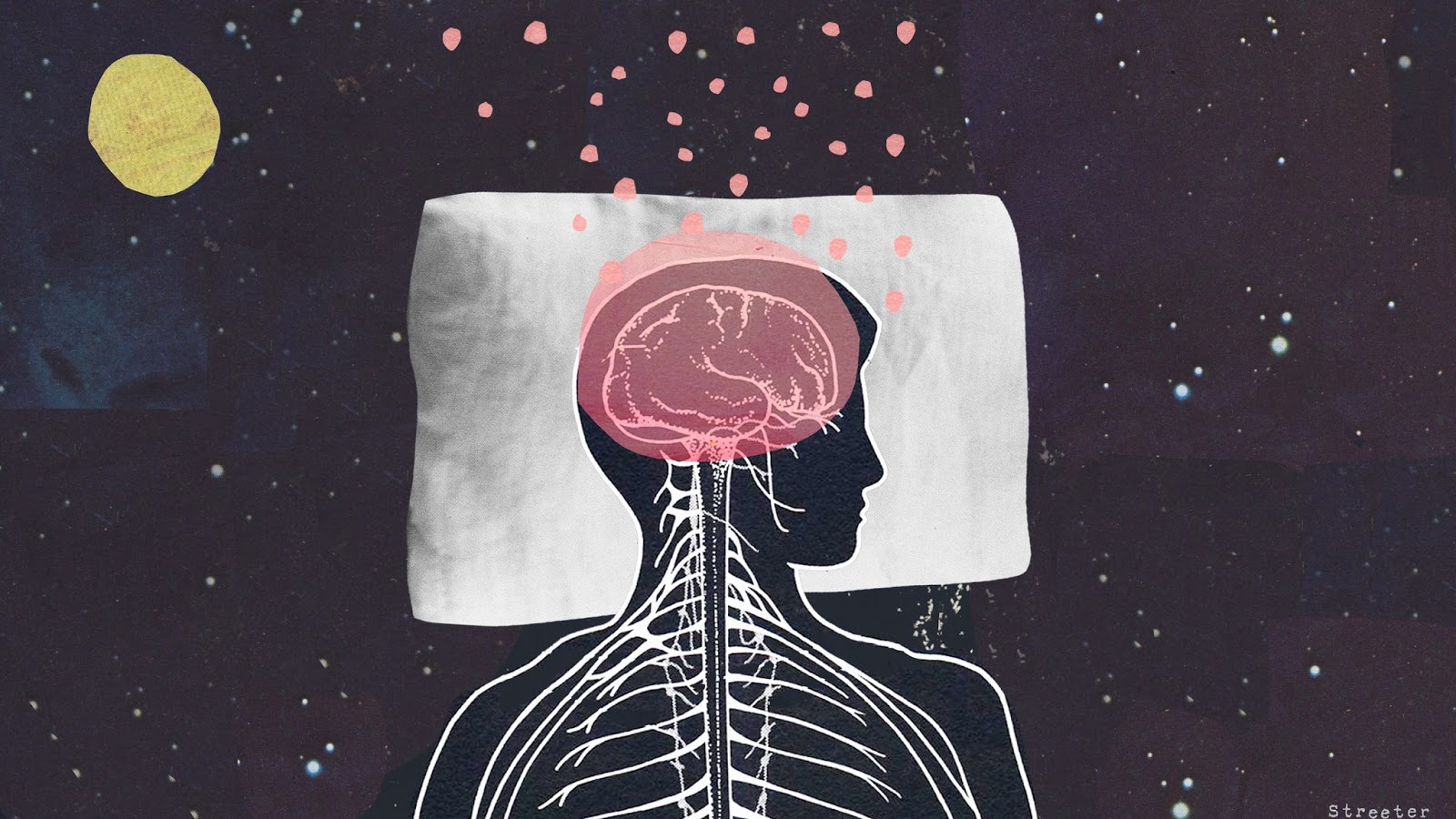
Women's brain power is 'boosted by a good night's rest while men can get away with napping'


A good night’s sleep could help boost your brain power – but only if you are a woman. And a long afternoon nap has the same effect on men, scientists have discovered.

Researchers from Germany discovered a link between women’s sleep and intelligence, and also found similar patterns for men who take afternoon naps. They believe the differences between how sleep affects the sexes could be down to how men and women’s brains are structured, as well as how hormonal changes affect the body during the day.

Scientists from the Max Planck Institute in Munich analysed the sleep patterns of 160 adults with a broad range of IQs, of which 72 were women and 88 were men. 

Participants also underwent intelligence tests which measured reasoning and problem solving.

They monitored how sleep spindles – bursts of activity in the brain – appeared during the dreamless, non-rapid eye movement state of sleep.

Sleep spindles vary in length and intensity and can ‘light up’ different parts of the brain. They have previously been associated with intelligence.

The study, presented at the FENS Forum of Neuroscience in Copenhagen, found a link between slow sleep spindles and intelligence in women, but not men.

Professor Martin Dresler said the presence of sleep spindles could indicate the quality of white matter in the brain, which connects to grey matter – the information-processing parts of the brain.

He said that integrity of white matter was associated with higher IQ scores in women, but there was no such correlation in men. 

This suggested the structure of women’s brains meant sleep which boosted this white matter could benefit their intelligence.

Researchers also examined 86 men having afternoon naps of 100 minutes – but no women were studied.

Men having naps showed the same link between slow sleep spindles and intelligence that was evident for women overnight.

The scientists said this showed there was a ‘fundamental difference’ between daytime and night-time sleeps. 

They suggested the way hormones behaved differently during the day could cause the changes.

Professor Dresler said: ‘Our results demonstrate that the association between sleep spindles and intelligence is more complex than we have assumed until now.

‘There are many factors involved in intellectual abilities, and sleep is just one of them.

‘This large study of men and women give us a more accurate framework for the next phase of research which will involve differences in individuals’ sleep patterns.’ 


Sunday, July 3, 2016

Eat spinach to stay sharp: Two helpings a day knocks 11 YEARS off your brain age


A study found that pensioners who regularly ate spinach and other leafy greens stayed sharper for longer. Men and women who had just one or two helpings a day had the brainpower of people 11 years younger.

The US researchers said that something as simple as eating more greens could help protect against the onset of Alzheimer’s.

It and other forms of dementia affect more than 800,000 Britons and, worldwide, the number of sufferers is predicted to treble to 44million by 2050 as the population ages.

With existing drugs of limited use and search for a cure ending in disappointment time and time again, some doctors argue that changes to diet and lifestyle offer the best hope of staving off the disease.

The researchers, from Rush University in Chicago, quizzed 950 men and women about their diet.

The volunteers, who had an average age of 81, then did a battery of mental tests every year for up to ten years.

The brains of those who ate leafy green vegetables, such as spinach and kale, aged more slowly, the Experimental Biology conference in Boston heard.

The effect was big, with the slowing of cognitive decline equivalent to 11 years, on average.

It is thought that vitamin K, folate or vitamin B9, and the natural colourings lutein and beta-carotene were behind the effects.

Researcher Dr Martha Morris said: ‘Losing one’s memory or cognitive abilities is one of the biggest fears for people as they get older

‘Since declining cognitive ability is central to Alzheimer’s disease and dementias, increasing consumption of green leafy vegetables could offer a very simple, affordable and non-invasive way of potentially protecting your brain.

‘With baby boomers approaching old age, there is huge public demand for lifestyle behaviours that can ward off loss of memory and other cognitive abilities with age.

‘Our study provides evidence that eating green leafy vegetables and other foods rich in vitamin K, lutein and beta-carotene can
help to keep the brain healthy to preserve functioning.’

She now wants to find out just how these nutrients nourish the brain.
In the meantime, those who don’t like spinach can also get their vitamin K, lutein and beta-carotene from carrots, tomatoes and peppers.


Also read: Blend of 30 vitamins and minerals may reverse aging of the brain